Hot Pocket Dough
 By AI
By AI
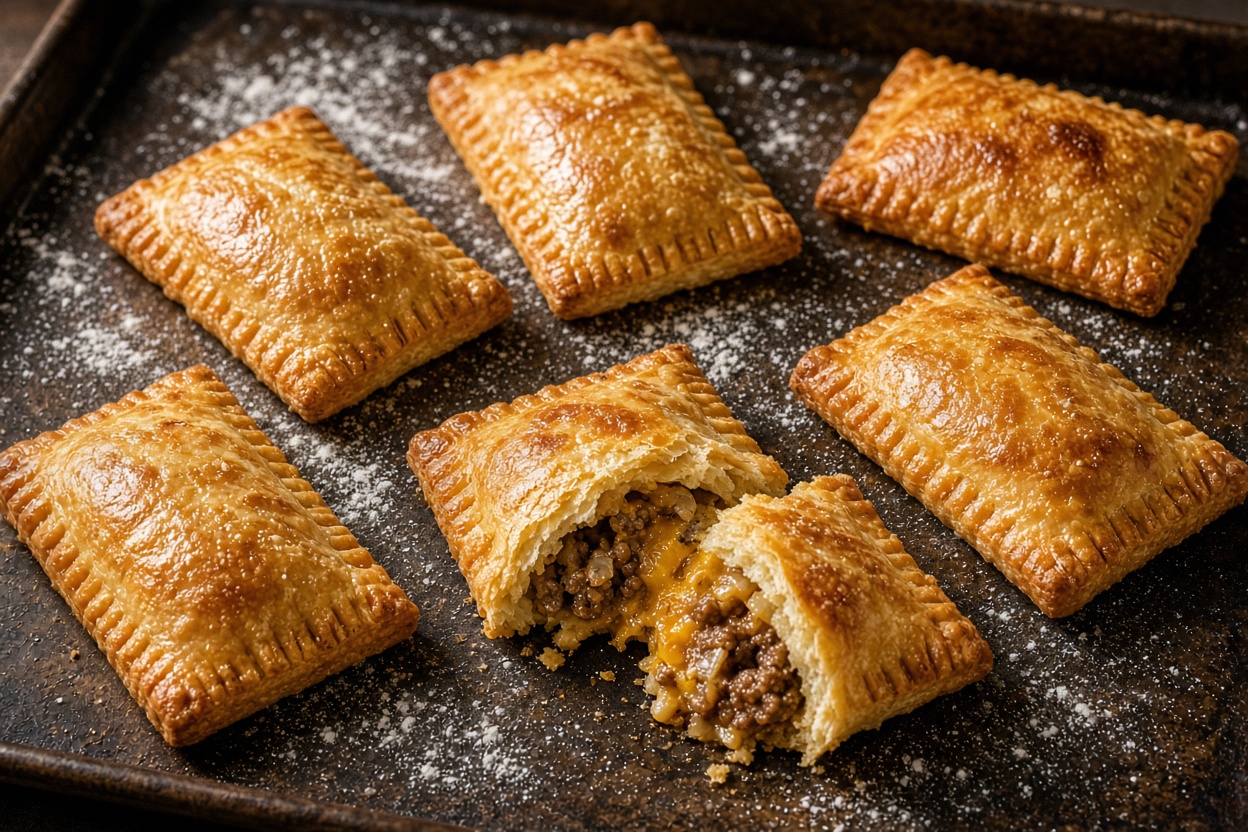
- Prep
- 30 min
- Cook
- 20 min
- Yield
- Dough for 8 pockets
The first pocket I trusted came out of a church-basement oven that ran hot on the left. We were feeding a funeral lunch out of the freezer, and the dough was mine because the man who usually made it — I will not name him — had salted it like an afterthought and then looked surprised when the seams opened and the filling went down the pan. He called it rustic. I have not forgiven the seams, and I have not forgiven him, which is between me and the Sunday reading.
A hot pocket is a small covenant, and this is not pizza dough, whatever the careless will tell you. Pizza dough wants holes and a blister. A pocket wants a wall that holds. The butter keeps it tender, the egg gives it a surface worth browning, and the salt is a decision I make on purpose. I have made this dough in parish halls, on a diner line that smelled of coffee and floor soap, and once in a rented kitchen where the only clean bowl was a stockpot. It rose anyway. Character is not equipment.
Fill it with what the week left you, so long as it is already cooked and not wet enough to turn the crimp into a rumor. Ham and cheese will do. So will last night's chicken, chopped small and dried on a towel. I will answer for the dough. The rest is leftovers and nerve.
Ingredients
- 2/3 cupwhole milk, warmed to 110°F / 43°C
- 2 1/4 teaspoonsactive dry yeast
- 1 tablespoongranulated sugar
- 3 tablespoonsunsalted butter, melted and slightly cooled
- 1 largeegg, for the dough
- 1 to 1 1/4 teaspoonskosher salt (1 tsp Morton, or 1 1/4 tsp Diamond Crystal)
- 3 cupsall-purpose flour, plus more for dusting
- 1 teaspoonneutral oil, for the bowl
- 1 largeegg, for the wash
- 1 teaspoonwater
- about 2 2/3 cupsfully cooked filling, cooled
Method
- Stir the warm milk, yeast, and sugar together in a large bowl and let stand until foamy, 5 to 8 minutes. If it does not foam, discard it and begin again with fresh yeast.
- Whisk in the melted butter, the dough egg, and the salt until the salt is fully dissolved.
- Stir in the 3 cups of flour until a shaggy dough forms. Turn it onto a lightly floured counter and knead for 8 to 10 minutes, adding flour a tablespoon at a time only if it sticks, until smooth and slightly tacky.
- Shape the dough into a ball and set it in a lightly oiled bowl, turning once to coat. Cover and let rise in a warm spot until doubled, about 1 hour.
- Heat the oven to 375°F / 190°C. Line a sheet pan with parchment paper.
- Punch the dough down and divide it into 8 equal pieces. On a lightly floured surface, roll each piece into a 6-inch circle.
- Spoon about 1/3 cup of cooled filling onto one half of each circle, leaving a 1/2-inch border. Any poultry in the filling should already have reached 165°F / 74°C, and any ground meat 160°F / 71°C.
- Fold the dough over the filling, press out the air, and crimp the edge firmly with a fork. Set the pockets on the pan, cover, and rest for 15 minutes.
- Beat the remaining egg with the water and brush the tops. Cut a small slit in each pocket so steam can escape.
- Bake until deep golden and the dough at the center of a pocket reads 190°F / 88°C, 16 to 20 minutes. Rest 5 minutes before eating.
Wrapped tight, the unbaked dough keeps two days in the refrigerator, or about a month frozen. Thaw it overnight in the fridge and give it an hour on the counter before you roll. Baked pockets freeze cleanly; reheat them at 350°F / 175°C until the crust is crisp again, not in a microwave, unless you want a wall that has surrendered. I put a sharp green salad beside them and leave the sweet things alone. The salt was already decided.